
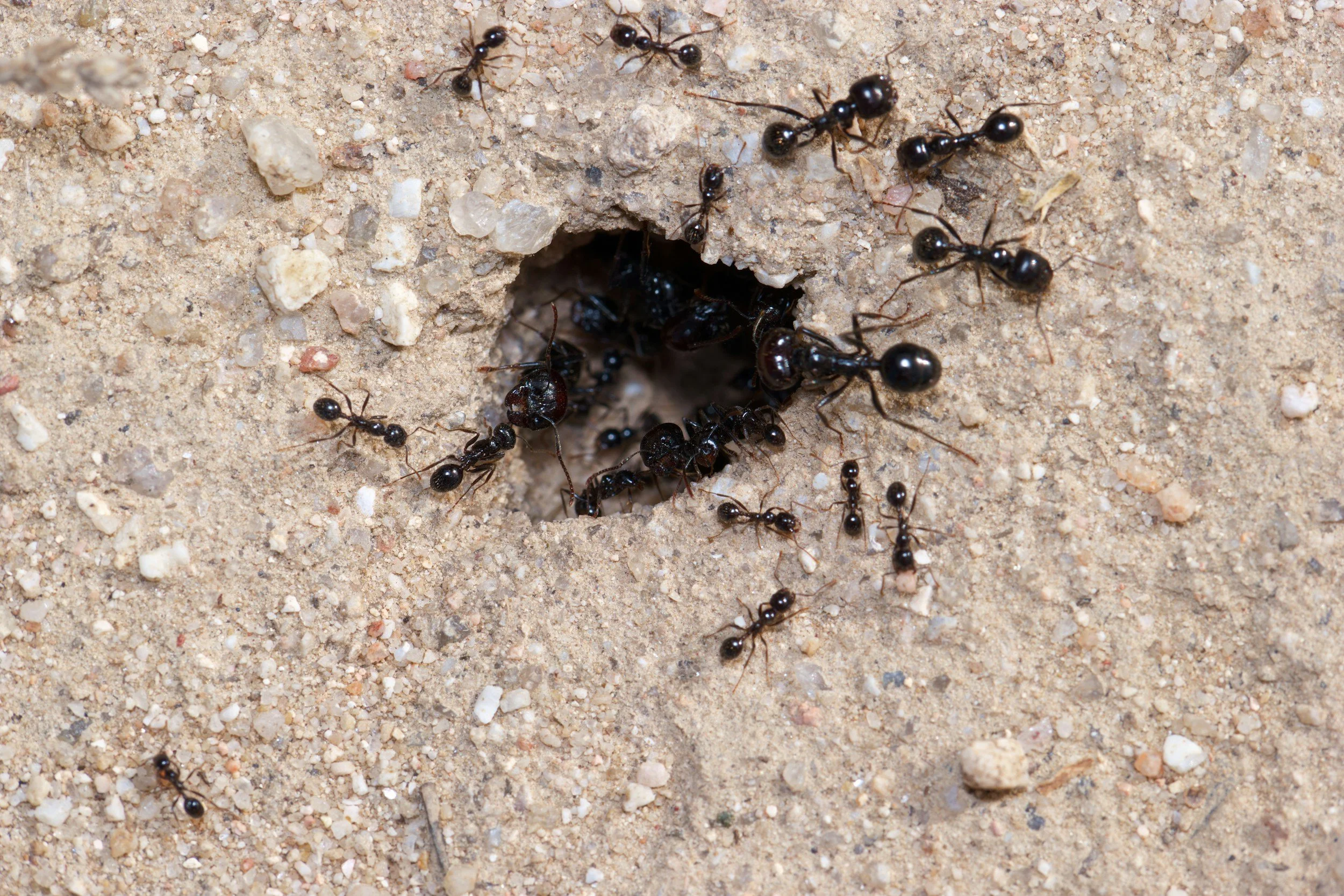
Common Ants in Michigan Homes
Different ants respond to different strategies. Correct identification helps eliminate the colony faster and reduces the chances of recurring activity — especially around kitchens, bathrooms, and foundation entry points.
Carpenter Ants
Carpenter ants are often associated with moisture issues and can excavate damp or damaged wood. While they don’t eat wood like termites, they can cause structural damage over time if the moisture source isn’t addressed.
Pavement Ants
Common around foundations, driveways, and slabs. These ants typically enter through cracks in the foundation, expansion joints, or small gaps along the exterior perimeter.
Odorous House Ants
Often called “sugar ants,” these are common kitchen invaders attracted to food and moisture sources. They can be persistent if the colony isn’t properly targeted and entry points aren’t reduced.
Signs You May Need Professional Ant Control
A few ants can happen in any home — but repeated trails, daily activity, or ants showing up in multiple rooms usually means there’s an active nest nearby or an established entry point.
Common warning signs
Signs the problem is established
Trusted Ant Control Services in Northern Macomb & Oakland County
Wells Pest Control provides professional ant control services throughout Romeo, Washington Township, Almont, Lake Orion, Rochester Hills and surrounding Michigan communities. Whether you're dealing with carpenter ants in damp wood, pavement ants along the foundation, or nuisance ants invading your kitchen, we identify the source of the infestation and apply targeted treatments designed for long-term control.
Our approach focuses on eliminating the colony, reinforcing the exterior perimeter, and helping prevent future activity — not just temporarily reducing visible ants. If you’re seeing recurring trails, indoor winter activity, or ants returning after DIY sprays, professional treatment can provide lasting relief.
Professional Ant Control in Romeo & Washington Township, MI
Our Ant Treatment Process
Ant control works best when it’s based on correct identification, targeted treatment, and strong exterior prevention. Here’s how we handle ant problems for long-term results — not just a quick knockdown.
Detailed Inspection
We identify the species, locate entry points, and determine likely nesting areas inside and outside the home.
Targeted Treatment
We use precise baiting and crack-and-crevice applications designed for the specific ant species.
Exterior Barrier Application
We treat the foundation perimeter and key access points to reduce re-entry and prevent new trails from forming.
Prevention Recommendations
We provide guidance to help reduce moisture and entry conditions, so your home is less attractive to ants going forward.
Why Store-Bought Sprays Often Don't Solve the Problem
Most over-the-counter ant sprays eliminate visible ants but do not address the colony itself. Killing the workers you see may temporarily reduce activity, but the nest continues producing more ants.
In some cases, improper treatments can cause certain ant species to scatter or "bud", creating multiple smaller colonies and making the problem worse. Without proper identification and targeted treatment, ant issues often return weeks later.
Professional inspection, correct bait placement, and exterior perimeter reinforcement are key to long-term control - not just short-term relief.
Ant Control FAQ
Quick answers to the most common questions we hear from homeowners. If you need help right away, call or text and we’ll point you to the fastest solution.